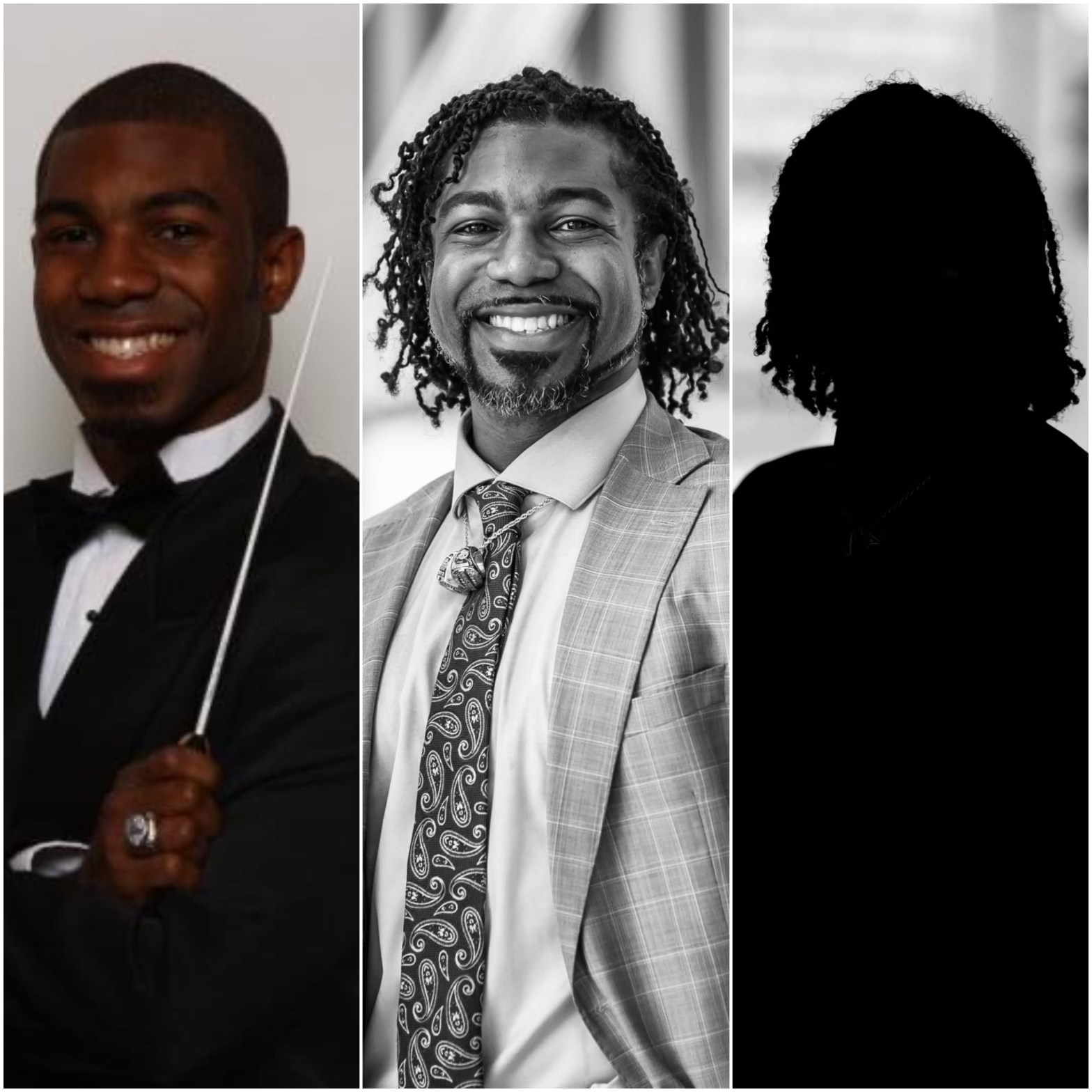
An International Baccalaureate High School graduate and diploma recipient. A freshly graduated college graduate from one of the preeminent universities and top-tier research institutes in the country with a bachelor’s and master’s degree. The evidence supports the claim that Dré was an educated individual…by academic standards. He was always taught to value education and he held it in high regard, even though, arguably, it came fairly easy to him. However, his parents always impressed upon him the importance of understanding that so many things can be taken away from anyone, but education would always reside within. He touted that education as a badge of honor and looked for every opportunity to put it on display. Fortunately, while in college, after entering as a double major in microbiology and music education, on the cusp of completing the science-based degree, he had an encounter with a young martial arts student that enhanced his perspective and guided him to the realization that his passion, purpose, responsibility, and ministry was to teach. He entered the professional education realm fueled by an unbridled fire to make a change and provide opportunity for all students. His weapon – relationship-building! One thing about that young man was that he understood the power of relationships; they are the currency of success. Provide each student with what they need, and they will succeed. No questions asked. He didn’t realize it at the time, but he was armed with equity by another name. His version of equity existed in the form of differentiated instruction, viewed from the lens of supporting each student, not simply providing the materials in a variety of digestible ways. His approached garnered the attention of his colleagues, who recognized him as their choice for Teacher of the Year during his third year of teaching; of which, he would go on to be a finalist for the 7th largest public school district in the nation. But it wasn’t his time…he still had MUCH to learn.
But what? He valued the fact that he had been educated at a prestigious PWI (Predominantly White Institute), held multiple degrees, demonstrated his effectiveness in the classroom, contributed to his profession, and treated all of his students with respect! This was the standard that all others were held to…he checked all of the boxes. It didn’t matter that he was the only finalist of African descent, because color did not matter. Dré prided himself on the fact that he was colorblind. Having grown up in diverse neighborhoods, in his eyes, he hadn’t dealt with situations where ethnicity placed him at a disadvantage. This was largely due to something his mother instilled in him throughout his young life. She would say, “No one in this world is better than you; but you aren’t better than anyone else.” That stuck. And with that, came a confidence that regardless of the obstacle, if something was meant for him, he would have it. No challenge was too difficult, no opinion too persuasive, and no desire or dream too big, for him to accomplish. While that mantra propelled him to achieve and fueled his competitive ambition, it also left him an incredible blindspot. This blindspot left him blissfully naive and ignorant to the role his ethnicity played within his narrative. Some may read that last sentence as a negative thing, but there are many angles by which to view this. The confidence that Dré traditionally carried would often be perceived as arrogance, as he was notorious for not placing any weight on the opinions of others, but ultimately making a decision that was based on logic and not emotion. This is also the mindset that allowed him to look past situations that found him on the receiving end of racism or racially-charged discrimination. This ignorance was just viewed as an obstacle to be overcome, which he did. But in looking past those discriminating events, he missed the true lesson in tests. He was so concerned with showing how he could overcome the odds that he lost the reason behind why he had to experience that trial. Thank God for hindsight and introspection! Dré was able to accomplish many great things and impact the lives of some absolutely phenomenal young adults who would go one to be world changing influences themselves; but, he lacked the ability to be truly transformative through the implementation of TRUE equity – the creation and execution of systems within the currently established processes that have established generational barriers in order to ensure an equal opportunity for ALL students to actively pursue the best version of themselves.
As a male of African descent who was viewed as successful, he was much more than just an effective educator. With each obstacle and barrier that he overcame, he demonstrated to the students both under his charge and those throughout the community that success is possible. But how can you elevate a people according to their needs and systemic barriers preventing progress when you lack awareness of the generational impediments that have caused this gap in progress? How do you establish and promote sustainable change guided by equity for people of African descent when you never learned about anything other than Martin Luther King and Rosa Parks throughout your 20 years of education consisting of 2 diplomas and 2 degrees? To reference the quote of Sir Isaac Newton, in order to see further, he would have to stand on the shoulders of giants. Dré’s vision for his purpose, while altruistic and guided by the right principles, lacked the perspective to fulfill a greater potential that went outside of the 4 walls of his music classroom, even if he didn’t see it. But what’s next? When did the shift happen?
LikeLoading...
Related
Published by Dr. Dré Graham
Award-winning and GRAMMY-nominated educator, Dr. Dakeyan Chá Dré Graham, travels throughout the United States as an acclaimed motivational speaker, author, and clinician. He advocates for student, educator, and parent empowerment and opportunity as the Assistant Principal at Talbot Elementary School, formerly holding the position of Director of Educational Equity and Outreach for Alachua County Public Schools and Assistant Principal at Rawlings Elementary School. He also currently serves as musical director and conductor of the Alachua County Youth Orchestra in Gainesville, FL. CEO and Founder of Re-Imagining Equity and Learning (R.E.A.L.), Dr. Graham actively travels the nation delivering keynote speeches, professional development seminars, and workshops in the educational, instructional, musical, and DEIA (Diversity, Equity, Inclusion, and Access) spaces. He is also widely sought out as a music clinician, having worked with band and orchestra students and ensembles across the southeastern United States. The 2019 Hillsborough County Teacher of the Year, Dr. Graham was selected in July 2019 as the 2020 Florida Teacher of the Year, representing 74 school districts and more than 195,000 teachers. During the 2019-2020 school year, Dr. Graham was on sabbatical from teaching and served as the Christa McAuliffe Ambassador for Education. In this role, he toured the state delivering motivational speeches and workshops focused on empowering teachers to create the most impactful learning experience possible for their students.
Following his selection as the 2020 FLTOY, he went on to advocate for all of the students of Florida as a member of the executive cabinet and senior staff at the Florida Department of Education (FLDOE). In 2022, after serving for two years as the Executive Director in the Office of Independent Education and Parental Choice for the Florida Department of Education, Dr. Graham transitioned to support turnaround schools throughout the state as the Executive Director of School Improvement. As an avid equity champion, he also served as the Vice Chair of the Florida Council on the Social Status of Black Men and Boys, as a member of the education committee and chair of the mentorship committee. During this time, he founded the M.M.A.A.N. Up! (Male Mentors of African Americans Network) Statewide mentorship program initiative. He was also appointed by the governor of Florida as a Commissioner for the Florida Commission on Community Service in 2021, where he presently serves as chair of the Volunteer Services Committee and a member of the National Programs Committee. Dr. Graham also serves on a number of boards that directly impact the provision of opportunity for our world’s future leaders, including: University of Florida Alumni Association Board of Directors (Machen Florida Opportunity Scholarship and Diversity, Equity, and Inclusion Committees member and a Regional Director), Instruments of Change Board of Directors (President), Florida Association of Teacher Educators Board of Directors (Regional Director), The University of Florida Association of Black Alumni (President-Elect), the Community Foundation of North Central Florida Equity Task Force, Gentlemen’s Quest Tampa Board of Directors (Vice Chair), King High School Alumni Association, the Florida Music Education association Board of Directors (Emerging Leaders Committee Chair), and the Florida Bandmasters Association (Health and Wellness Chair).
A proud product of Hillsborough County Public Schools, Dr. Graham served as the Director of Instrumental Studies at his alma mater, C. Leon King High School in Tampa, FL, where his teaching responsibilities included leading the KHS Marching Lions, conducting the Wind Ensemble, Symphonic and Concert Bands, Jazz Bands, Symphony Orchestra, Chamber, Symphonic, and Concert Orchestras, Percussion Ensemble, and supervising the Lionettes Dance Team. During his 11 years in HCPS, his students consistently demonstrated determination, focus and tenacity as they earned a performance position in the prestigious Carnegie Hall.
Dr. Graham holds Bachelor’s and Master’s Degrees in Music Education (University of Florida), a Master’s in Educational Leadership (Concordia University), a Doctorate of Philosophy in Music Education (University of South Florida), a Doctorate of Education in Learning Design and Performance Technology (Florida State University), and a Doctorate of Musical Arts degree in Instrumental Conducting (University of Florida).
Serving as a past president of the Hillsborough Secondary Music Council and founder of the Eastern Coalition of Music Directors, Dr. Graham travels around the state as an adjudicator for both the Florida Bandmasters and Orchestra Associations. In 2012, Dr. Graham was a finalist for Hillsborough County Teacher of the Year and a semi-finalist and quarterfinalist for Grammy Music Educator of the Year in 2013 and 2020, respectively. He was acknowledged as a 2020 LifeChanger of the Year award recipient by National Life Group. Dr. Graham has been honored as a 2020 USF Outstanding Young Alumni Award Recipient, one of 40 Gators Under 40 in 2021 for his work in the field of education, and was inducted into the C. Leon King High School Hall of Fame as a member of the Wall of Pride for distinguished alumni in 2023.
Dr. Graham is blessed to share life with his wife, Casey (also an educator), and daughter, Aaliyah. His passion is to fight for ALL students to have an equitable educational experience tailored to their unique and individual needs in order for them to purse the best version of themselves, especially those furthest from justice. He works to continue positively impacting the next generation of world changers.
View more posts
4 thoughts on “In His Skin: “Educated” and Colorblind (Why Perspective Matters – Part 1 of 3)”
Can’t wait for the next release of this continuing blog!
Perspective is key. Even quantum physics teaches us this is the basis of all awareness. Everything exists from your point of view at all times. Challenging yourself to use another perspective is proof of intelligence and growth. Looking forward to the next segment.



Can’t wait for the next release of this continuing blog!
LikeLike
Awesome read! So proud of you son
LikeLike
Outstanding! Looking forward to parts 2 and 3.
LikeLike
Perspective is key. Even quantum physics teaches us this is the basis of all awareness. Everything exists from your point of view at all times. Challenging yourself to use another perspective is proof of intelligence and growth. Looking forward to the next segment.
LikeLike